


- Given the scale of Britain’s fiscal problems, there is precious little space for tax cuts
- However, Kemi Badenoch is right to say that the first priority, if there is the fiscal headroom, should be cutting what is the consensus choice among economists for Britain’s worst major tax
- As Shadow Chancellor Mel Stride told the Centre for Policy Studies yesterday, stamp duty is a ‘dreadful tax’. It means that ‘people don’t downsize… people don’t move from one place to another as readily, to where the work is… it’s an appalling tax’
- CPS work has shown that by depressing housing transactions, stamp duty also cuts the number of houses built, as developers are more likely to build when there are more buyers for their products
- As we argued in our 2019 paper ‘Stamping Down’ the combination of more transactions, more housebuilding and more people renovating and redecorating their new properties will substantially reduce the headline costs of cutting stamp duty, making it one of the tax cuts that delivers the most economic benefit – as well as boosting home ownership
Responding to the announcement, CPS Director Robert Colvile said:
‘The central fact of British politics is the cavernous gap between what we are spending and what we can afford to spend. It is right that the Conservatives have decided this week to address that gap by spending cuts rather than the tax rises planned by Labour, and that they are devoting the vast bulk of their proposed savings to repairing the public finances – which are likely to be in even deeper trouble by the next election.
‘However, if there is any money left, it should definitely go towards cutting Britain’s worst tax, stamp duty.
‘Stamp duty is a horrendous tax that depresses economic activity, harms productivity and prevents people living in the places and houses they want to. That means cutting it is not only right, but should be far more cost-effective than pretty much any other major tax cut, due to the boost to the economy.
‘In particular, as CPS work has shown, there is a very strong historic correlation between the number of property transactions and the number of houses built, with roughly one house built for every 10 transactions across the 20-year period we studied. Making it easier for people to move gives builders the confidence to build, generating a double win for the economy and for the public and helping to increase home ownership.’
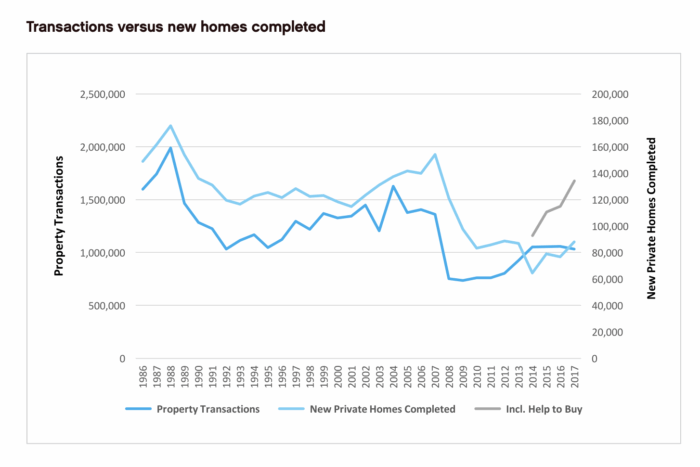
Sources: UK Housing Review, House of Commons Library, MHCLG
ENDS
NOTES TO EDITORS
- For further information, please contact Emma Revell on 07931 698246 or emma@cps.org.uk
- Robert Colvile is Director of the Centre for Policy Studies
- ‘Stamping Down’ is available here
- ‘In Conversation with Mel Stride’, recorded yesterday at Conservative party conference, is available here
- The Centre for Policy Studies is one of the oldest and most influential think tanks in Westminster. With a focus on taxation, economic growth, housing, immigration, and energy abundance, its goal is to develop policies that widen enterprise, ownership and opportunity
Date Added: Wednesday 8th October 2025


